Researchers Use AI to Create Alloys from Metal Scrap
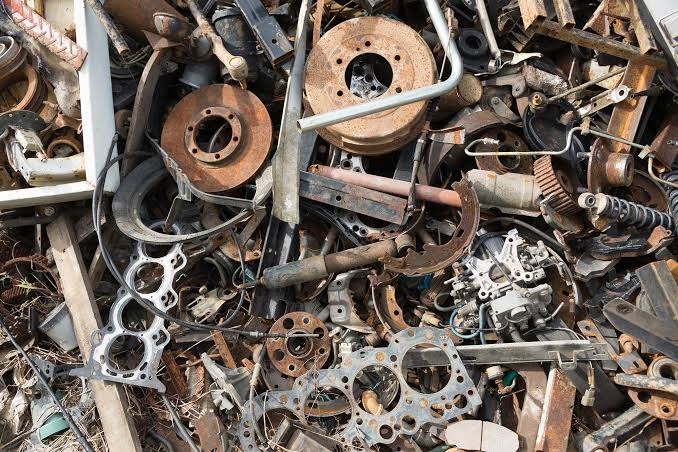
Researchers are using artificial intelligence (AI) to develop higher-performance metal alloys from scrap metal. The goal is to make metal production both more environmentally friendly and more cost-effective.
Demand for metal is high, yet the majority of this demand is still met through the extraction of raw ores rather than the recycling of scrap metal. While recycling scrap could reduce environmental impact by up to as much as 95 percent, it presents certain challenges: the chemical composition of metal scrap varies, and it often contains impurities that can compromise the quality of the resulting alloys. A German-Chinese research team has turned this challenge into an opportunity.
Led by Chao Yang of Shanghai Jiao Tong University, the team intentionally utilizes the impurities found in scrap metal as alloying elements. These resulting materials—dubbed “dirty alloys”—are not only resilient to fluctuations in the composition of the scrap, but the diverse range of elements present is actually leveraged to enhance the properties of the recycled materials. Another advantage is that these “dirty alloys” are more economical to produce.
To achieve this, the team employs artificial intelligence—specifically, machine learning. An algorithm begins by generating potential new alloy candidates based on existing ones, varying parameters such as chemical composition, as well as the temperature and duration of heat treatment, within defined limits.
Improved Balance Between Strength and Formability
Artificial neural networks are then used to predict the tensile strength and elongation at break for each of these alloy candidates. Based on these projections, the algorithm identifies compositions that offer a superior balance between strength and formability compared to existing alloys. A second model, trained on a larger dataset of alloy compositions and material properties, evaluates the selected candidates.
The researchers produced and subsequently tested the most promising materials. The results of these tests are fed back into the database, refining the predictive model for the next iteration. This process of reconciling computational predictions with experimental outcomes allows for the step-by-step improvement of alloy selection.
“Currently, impurities in metal scrap are typically diluted by adding primary metal. However, this diminishes the environmental benefits of recycling, as the production of primary metals requires vast amounts of energy and generates significant CO2 emissions,” explains Liuliu Han, head of a partner group from the Max Planck Institute for Sustainable Materials at the Suzhou National Laboratory in China. “Our new workflow uses AI and machine learning to identify specific impurities and develop alloys that not only tolerate these contaminants but actually benefit from them.”
Better and more cost-effective alloys
The team used ductile cast iron—a widely used alloy known for its tolerance to impurities—as a starting material. The researchers produced and analyzed 17 alloy variants suggested by the AI. Of these, 14 demonstrated an exceptionally good balance of strength and ductility: compared to previously recycled materials, tensile strength increased by up to 15.2 percent, while elongation at break improved by as much as 73.2 percent. Furthermore, production costs were approximately eight percent lower than those of the conventional method, which involves mixing metal scrap with primary iron. Next, the team intends to apply this AI-driven method to other materials, including recycled steels, as well as aluminum and copper alloys.
Around two billion tons of metal are produced globally each year, a large portion of which is derived from ores. Conventional metal production accounts for 10 percent of global energy consumption and approximately 8 percent of all greenhouse gas emissions—a figure that rises to around 40 percent when considering industrial emissions alone.
The team consisted of researchers from Shanghai Jiao Tong University, the City University of Hong Kong, East China University of Science and Technology, and Central South University in China, as well as the Max-Planck-Institut für Nachhaltige Materialien (Max Planck Institute for Sustainable Materials) in Germany. They describe their findings in the journal *Science Advances*.